
A switch from weekly to fortnightly bin collections is one of the options as Barnet Council struggles to reduce a £200 million deficit
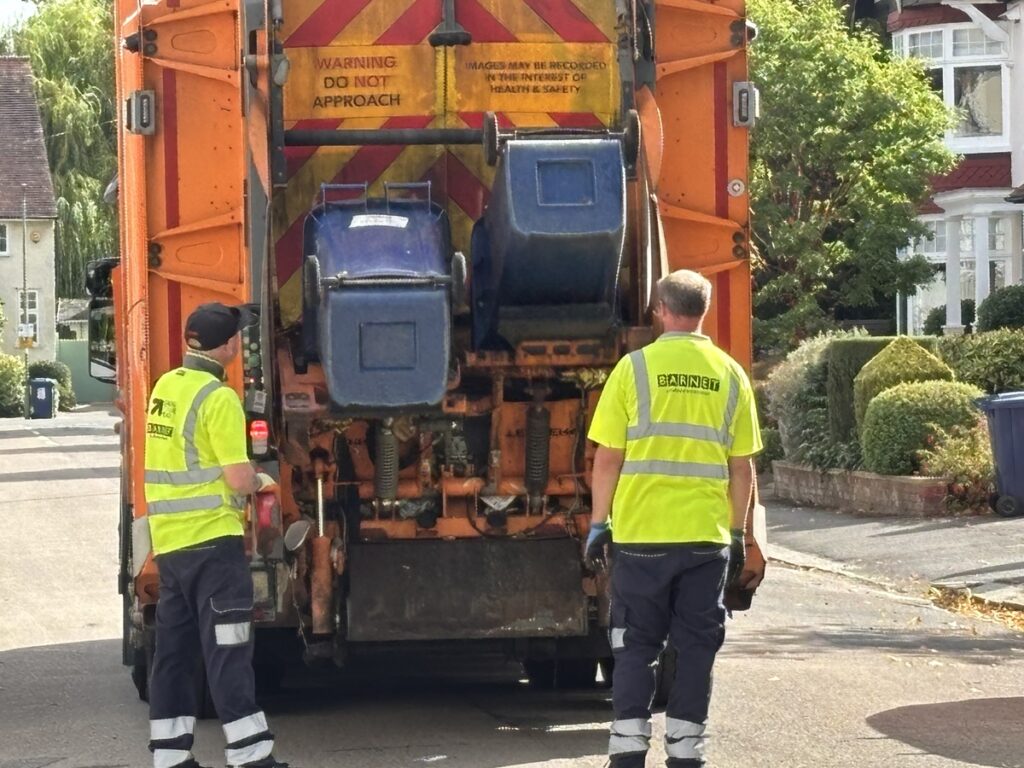
Barnet Council’s dire financial position has led to a warning that “very painful” decisions will have to made within weeks to find ways to reduce a predicted shortfall of £200 million.
A five per cent increase in council tax and a switch from weekly to fortnightly bin collections are two of the most likely options.
In an official statement the council says it needs to have a “brutally honest conversation with residents” about how to balance the books to find £200 million of savings.
The warning follows release of a government commissioned review which says the Borough of Barnet is in “a highly fragile financial position” and its deficit is projected to increase to £243.5 million by 2030-31.
By next year Barnet will have the largest budget gap of any London borough and it is one of nine councils relying on exceptional financial support from the Treasury.
East Barnet councillor Simon Radford, who is Barnet’s cabinet member for financial sustainability, says their budget for next year assumes there will be a council tax increase close to the legal maximum of 5 per cent and the council will review its waste collection service.
A failure to save costs by switching bin collections from weekly to fortnightly – a measure already introduced by many other councils – was a “missed opportunity” according to analysis conducted for the government by the Chartered Institute of Public Finance and Accountability.
Cost savings were not being implemented by Barnet Council at the “pace of scale required” because of “cautious decision making” and being slower to implement difficult reforms.
Recommendations about a switch to alternate weekly bin collections, as well reforms to the provision of temporary accommodation, children’s services and adult social care, needed to be in place by the end of September ready for a meeting of the council cabinet on Monday 12 October.
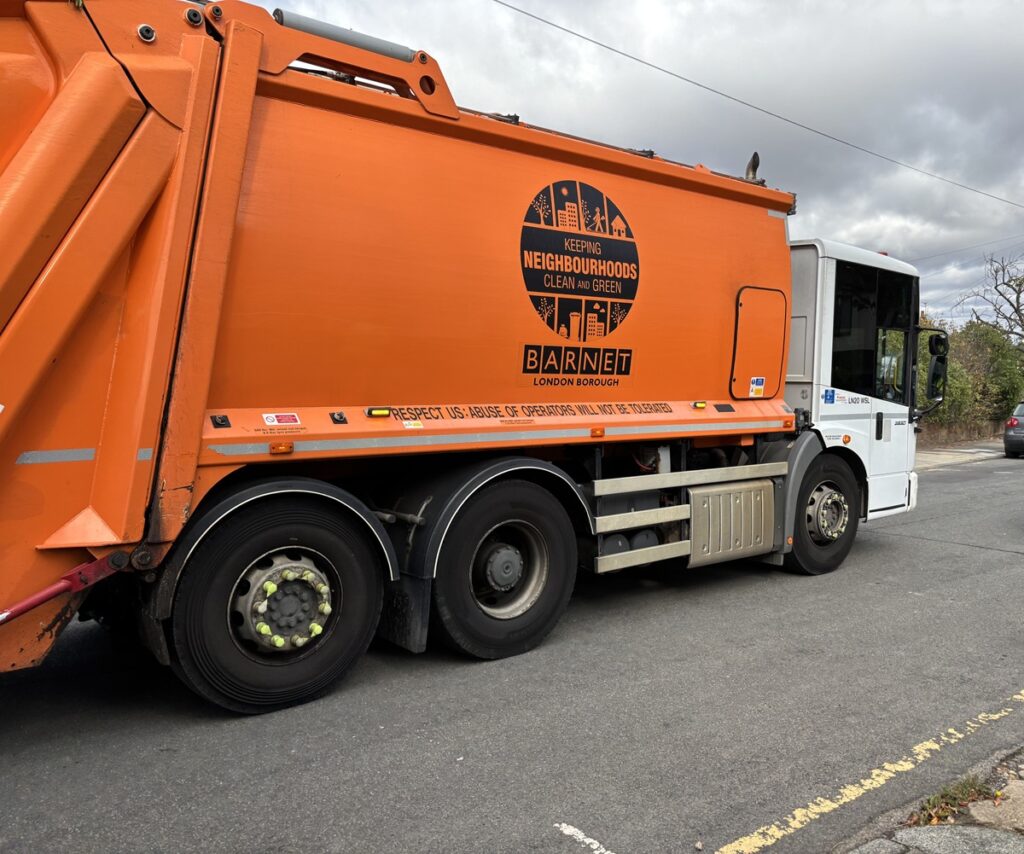
When the possibility of switching Barnet’s bin collections from weekly to fortnightly was last considered in 2019 under the previous Conservative administration, moving the waste collection to an alternate weekly service would have saved an estimated £400,000 a year.
At the time three quarters of English local authorities had already moved to fortnightly collections, and the CIPFA report says this was “a missed short-term opportunity.”
Barnet’s productivity and recycling performance in its waste services was weaker than in other comparable London boroughs.
The report also identified what it said was evidence of “savings fatigue” and the deferral of difficult decisions.
Another significant factor had been the council’s previous approach to council tax increases.
“Due to historic decisions to increase council tax by less than the maximum permissible, the council’s low tax base further constrains income flexibility.”
Previous Conservative administrations had taken pride in their policy of keeping Barnet’s council tax as low as possible – but the CIPFA analysis suggests this failed to acknowledge that Barnet faced “materially higher demand and cost pressures” than other comparable boroughs for adult social care, temporary accommodation and children’s social care.
In his response to the CIPFA findings, Councillor Simon Radford said reaching financial sustainability was Barnet’s top priority and the council welcomed recognition of the “scale and pace of change” required to solve our £200 million structural deficit by March 2029.
The need for services which the council had to provide was growing twice as fast as its income and far outstripped government funding.
“We have brought council spending under control, maintained high standards of adult social care while reducing the cost below national average, stabilised in-year spend on temporary accommodation and reduced our call on exceptional financial support by £10 million.
“The reality is that none of the levers in our control can tackle the scale of future demand without national policy intervention.
“Even if we were to cut all non-statutory spend, the short-term impact would be an £18 million budget reduction compared to the £200 million forecast gap.
“The report recommends reviewing council tax levels and waste collection, which we will do.
“Our budget assumes a council tax increase close to the maximum of 5 per cent. Anything further would need permission from government or a referendum in favour.”
Residents can have their say on moves to put Barnet’s finances on a sustainable footing at the next Barnet Question Times on Monday 26 October.
To apply for tickets: https://www.eventbrite.co.uk/e/barnet-question-time-budget-special-meet-the-leader-and-cabinet-tickets-1998956822667?aff=oddtdtcreator
7 thoughts on “A switch from weekly to fortnightly bin collections is one of the options as Barnet Council struggles to reduce a £200 million deficit”
Why not become a member? Receive our latest newsletter hot off the press four times a year, and support our work with a membership.
If you have some local news, history or want to bring something to our attention please email us.
I am wholly supportive of the move to fortnightly bin collections; the two of us living in my household rarely use more than a quarter of our recycling bin’s capacity each week and with so much waste now being recyclable, our landfill waste bin would hardly be filled to overflowing if it was emptied just once a year.
I am not aware of anything abnormal in our household’s lifestyle or our levels of consumer goods purchasing, so struggle to see how the majority of households could create enough waste to justify weekly bin collections, and don’t see why this perceived majority should bear the costs of the excessive consumption of those who create quantities of waste that necessitate weekly bin collections.
However, in order to accommodate those who do need their bins emptied weekly, I have a proposal that could boost Barnet Council’s finances by more than the projected savings from moving to fortnightly bin collections. Why not allow households to have the option to have their bins emptied weekly on payment of an annual subscription, using an arrangement similar to that currently in place for the collection of garden waste, whereby subscribers would be issued with a sticker to be adhered to their bins to indicate that the bins are to be emptied weekly rather than fortnightly?
Barnet Council’s deficit could be ameliorated more than somewhat by ending the installation and maintenance of the expensive (and rarely used!) electric car charging points all over the place! If someone wants to buy an electric car, that’s their prerogative, but I fail to see why Barnet’s council tax payers should subsidise their vehicular choice by providing them with charging facilities all over the place. After all, they wouldn’t pay for a petrol pump in my street…..
As a car driver who could afford an electric car but has chosen, for REAL environmental reasons NOT to buy one I find this policy both misguided and iniquitous.
I drive a 3 litre diesel, mycwife’s C-HRvisza hybrid which is a great compromise.
The constant deterioration of living standards here in Barnet is hard to swallow. What am I paying council tax for, if it’s not for the very basic services such as bin collection? What is a council good for if it can’t even collect bins once a week?
The debate to reduce bin collection frequency is absurd. Barnet council has a major structural problem. The social (adult) care bill is growing very fast in Barnet and worse, it will continue to grow in the years ahead. This is the primary reason for the budget deficit. And it’s nothing new. The “graph of doom” was published like 20 years ago!
It is therefore ridiculous to propose cutting vital services which the majority of Barnet residents are paying for, to fix this. This is just a short term band aid. What is the council planning to do in 5 years when the adult social care bill will have risen further? Stop bin collections altogether to save money?
A hard pill to swallow would be a substantial increase in council tax. I personally would accept this to keep certain council services in place, esp. because the CIPFA report confirms that Barnet council tax is relatively low compared with peers. But here again, what next? Why is Barnet’s adult social care bill increasing constantly?
As stated in the article, there is no lasting solution to this problem without national policy change. So, where is our MP on this? We have a labour council (albeit hung) and a labour central government. This is precisely the set up where a good labour MP should deliver. I hope he reads the comments here.
I thought when they out-sourced many of our council services some years back it was supposed to save us money. Well, we’re still waiting to see the savings. And now they’ve put us in so much debt they want to raise council tax again or reduce bin collections!?
And remember when they added the “London Olympics tax” to our council tax bills, claiming it was temporary and that it would return to the previous amount once the Olympics was over, but it never did!?
And just a thought, if collecting the bins is so costly maybe building more homes (which will all need their bins collected too) isn’t such a good idea. It’s just another example of hopeless governance where infrastructure is failing and not being invested in (whether it’s bin collections, the power grid, water/sewage, public transport, etc.) but they want to “build build build” as if everything is ticking over nicely.
This is inexcusable considering councils are receiving new funding following new packaging taxes such as Extended Producer Responsibility.
Labour seem to have made a rod for their own backs by not getting a grip on the budget sooner. The Tories holding council tax down for years and not increasing it in line with inflation left them a bad inheritance – but Labour have had a term to get a grip on this and don’t seem to be willing to take any hard decisions.
It’s notable that this is yet another area Dan T decides to absolve all responsibility. Happy to be seen supporting the council when the going is good – but hangs them out to dry when it’s tough.
We have Labour at all levels of government in Barnet. Now is the time for them to make it count to improve the lives of the people they represent. In Barnet however, it seems like we are just going to get used to the idea that public services will decline further and our local greenbelt likely to be nibbled away in the name of economic growth, and our local MP will, much like our new PM – prefer to stick to Instagram rather than fighting for his constituents.